
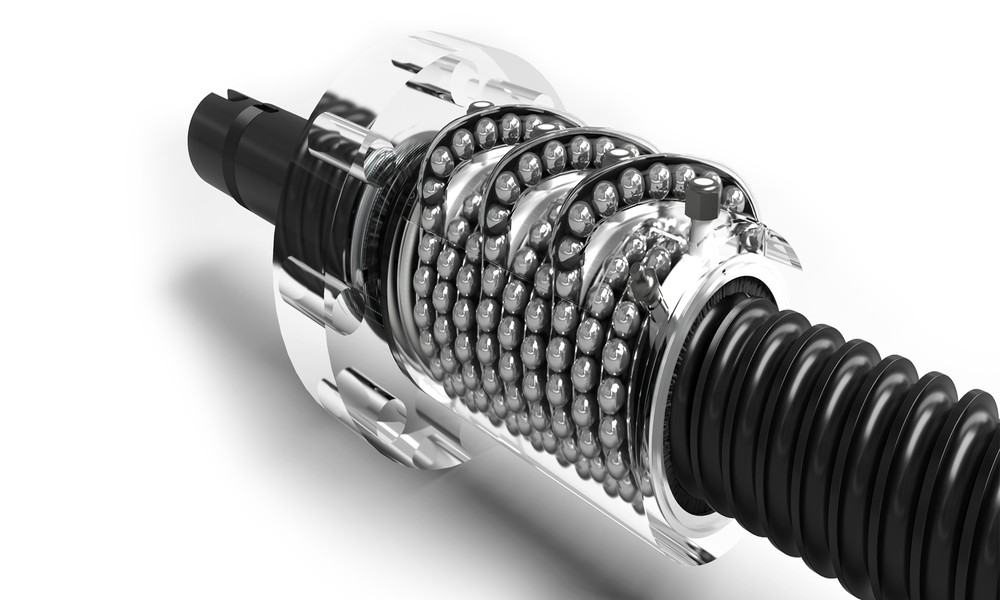
When designing or selecting a linear motion system, engineers and manufacturers frequently face a critical decision: whether to implement a ball screw or a belt drive system. In today’s industrial landscape, where high-speed throughput and micron-level precision are paramount, selecting a high-performance component like WTF Ball Screws (บอลสกรู WTF) has become a strategic requirement for optimizing machine efficiency. This article provides an in-depth comparison of both systems, alongside seven essential selection criteria to help you identify the most suitable and cost-effective drive core for your long-term operational needs.
What is a WTF Ball Screw?
A WTF Ball Screw is a high-precision mechanical actuator designed to convert rotary motion into linear motion with high efficiency. By utilizing a recirculating ball mechanism between the screw spindle and the nut, the system significantly reduces friction compared to traditional lead screws.
The WTF series is specifically engineered for high-demand industrial applications where conventional belt-driven systems may lack the necessary rigidity or accuracy. Key technical advantages include:T
High Precision: Capable of controlling linear movement down to the micron level.
Low Friction: Minimal energy loss due to the rolling contact mechanism rather than sliding friction.
Superior Load Capacity: A robust structure designed to withstand high axial loads and heavy-duty tension.
7 Selection Tips: WTF Ball Screws vs. Belt Drives (Internal Insights for Engineers)
Deciding on a drive system impacts the Total Cost of Ownership (TCO) of your machinery. Here are 7 technical factors to consider:
1. Precision and Repeatability
WTF Ball Screw: Features near-zero backlash, making it ideal for high-precision applications such as CNC machinery or electronic assembly robots.
Belt Drive: Due to the inherent elasticity of the belt material, sudden stops or direction changes can cause “belt stretch,” leading to lower positioning accuracy compared to ball screws.
2. Speed and Acceleration Limits
Belt Drive: The clear winner for velocity, capable of reaching speeds of 5-10 m/s. It is perfect for high-speed “Pick and Place” operations with short cycle times.
WTF Ball Screw: Limited by “Critical Speed” to prevent shaft resonance. However, the WTF model is designed with an optimized circulation path for smoother operation at moderate speeds compared to standard models.
3. Load Capacity and Thrust
WTF Ball Screw: Engineered to handle massive axial loads. Its hardened steel construction ensures it can drive heavy workpieces without deformation.
Belt Drive: Limited by the tensile strength of the belt. Under excessive loads, the belt may suffer from “tooth jumping” or total failure.
4. Stroke Length and Installation
Belt Drive: Excels in long-stroke applications (e.g., automated warehouse systems), reaching several meters without a significant increase in cost.
WTF Ball Screw: Best suited for short to medium strokes. As the shaft length increases, controlling deflection and maintaining precision becomes significantly more challenging.
5. Environmental Factors and Maintenance
WTF Ball Screw: Requires consistent lubrication and strict dust protection. However, with proper maintenance, it offers a much longer service life and higher reliability.
Belt Drive: More resilient to dust and debris and requires no lubrication, but the belt tension must be checked regularly to avoid quality degradation.
6. Mechanical Efficiency and Energy
WTF Ball Screw: Boasts mechanical efficiency of 90% or higher. This high efficiency means the motor requires less power to achieve the desired thrust.
Belt Drive: Suffers from energy loss due to belt bending and frictional heat, resulting in slightly lower overall efficiency.
7. Application Target Analysis
High-Precision Tasks: Machining, grinding, or laser systems → WTF Ball Screw is mandatory.
General Conveying: Moving goods or high-speed packaging machines → A Belt Drive system is usually sufficient.
Guidelines for Selecting the Right WTF Ball Screw for Your Application
To ensure optimal performance, selecting the ideal Ball screw WTF should be based on the following technical considerations:
1. Evaluating Lead and Diameter:
Lead: A larger lead facilitates higher travel speeds but reduces overall thrust. Conversely, a smaller lead delivers higher thrust and superior positioning precision.
Diameter: Increasing the shaft diameter enhances mechanical rigidity and allows the system to support significantly heavier loads.
2. Analyzing Load and Speed Requirements:
It is essential to consider the relationship between the total mass the system will carry and the required operational speed.
Selecting inadequate specifications can lead to premature wear, a shortened service life, or a significant decrease in machine efficiency.
3. Choosing a Reliable Supplier:
Since ball screws are high-precision components, prioritizing reputable distributors is paramount.
Look for suppliers that provide transparent technical data, international manufacturing standards, and professional engineering consultation.
Ensuring a comprehensive warranty and after-sales support is vital for long-term operational reliability.
Choosing the right drive system is a critical factor that determines the quality and cost-effectiveness of your business in the long run. If your project demands high precision, heavy load handling, and long-term durability, investing in a ball screw (Model: WTF) is the most valuable choice, as it minimizes the rejection rate of workpieces and reduces overall maintenance costs. Conversely, if your primary goal is rapid movement over long distances within a limited budget, a belt drive system may be the more appropriate solution.
To achieve maximum engineering efficiency, partnering with a trusted expert is essential. I.N.B. Enterprise, the official THK distributor in Thailand for over 30 years, offers professional technical consultation for load calculations and model selection. We ensure you receive the most accurate solution for your machinery, guaranteeing that your investment translates into tangible, high-performance productivity.