
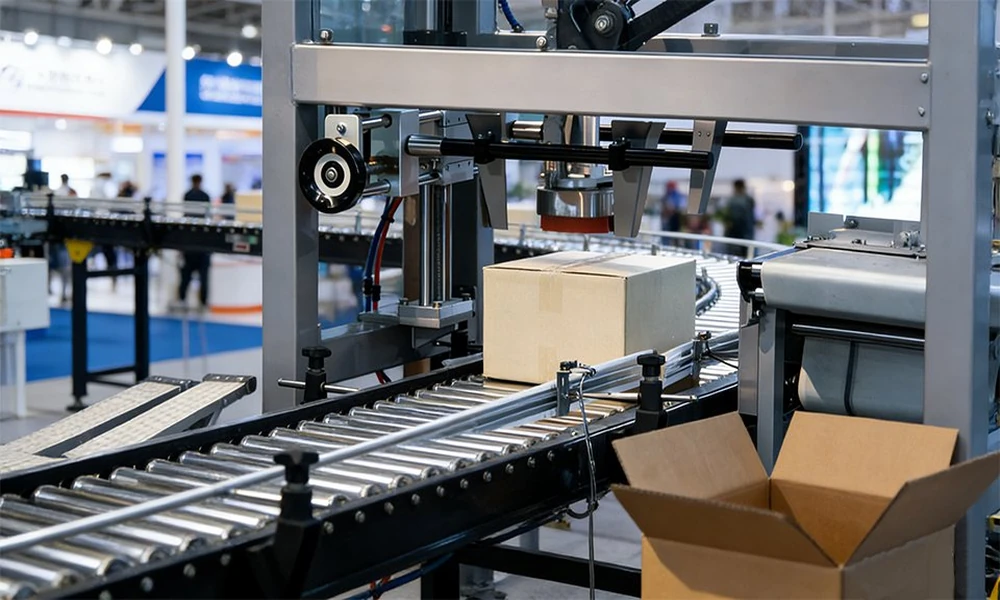
Key Takeaways
- A carton packing machine can significantly improve packaging speed by automating repetitive packing tasks and reducing production bottlenecks.
- Automated packing systems enhance accuracy and consistency, helping businesses reduce human errors, product damage, and packaging waste.
- Automation can lower labor requirements by handling repetitive tasks while allowing employees to focus on higher-value responsibilities.
- Carton packing machines provide greater flexibility and scalability, enabling businesses to adjust production according to changing market demand.
- Consistent packaging quality strengthens brand reputation and improves customer satisfaction by ensuring products are packed uniformly.
- Modern packing automation can help businesses future-proof their operations by supporting long-term growth and more efficient production processes.
Faster Packaging Speeds and Higher Production Output
One of the most significant ways carton packing machines boost packaging efficiency is by increasing production speed. Manual packing processes can be time-consuming, especially when businesses handle large product volumes. Employees must repeatedly perform tasks such as positioning products, folding cartons, inserting items, and sealing packages. These repetitive processes can create bottlenecks and slow down the entire production line.
Automated packing equipment is designed to perform these tasks quickly and consistently. By integrating a carton packing machine into a production line, businesses can process a higher volume of products in less time while maintaining consistent output.
Automation can provide several important advantages:
- Faster order processing and fulfillment
- Reduced production bottlenecks
- Higher packaging throughput
- More consistent operating speeds
- Less downtime caused by repetitive manual tasks
Speed is particularly important for companies operating in competitive industries where customers expect fast order fulfillment. Businesses that can package and ship products efficiently are better positioned to meet customer expectations and respond to sudden increases in demand.
Reducing Downtime Through Automation
Manual packaging operations can experience interruptions caused by employee fatigue, breaks, staffing shortages, or inconsistent workflows. Automated equipment can operate continuously for extended periods, helping maintain a steady production flow.
This consistency allows manufacturers to reduce unnecessary delays and improve overall operational efficiency. Instead of slowing down during busy periods, companies can use automated systems to maintain reliable packaging output.
Improved Packaging Accuracy and Reduced Human Error
Accuracy is another major factor that determines packaging efficiency. Manual packaging leaves room for mistakes, particularly when employees perform repetitive tasks for long periods. Incorrect product placement, improper carton sealing, or inconsistent packaging can result in damaged goods, customer complaints, and costly rework.
Automated packing machines are programmed to perform specific tasks with precision. Once properly configured, the equipment can repeat the same process consistently across large production volumes.
The result can include:
- More accurate product placement
- Fewer packaging mistakes
- Reduced material waste
- Less product damage
- Lower rework and return rates
Improving accuracy does more than save time. It can also reduce the costs associated with correcting packaging errors. When products are packed correctly the first time, businesses spend fewer resources on rework, replacements, and customer service issues.
How Precision Improves the Customer Experience
Packaging is often the first physical interaction customers have with a product. Damaged, poorly sealed, or inconsistent packages can create a negative impression of a brand.
Automated packaging systems help businesses deliver more reliable results. Consistent carton sizes, accurate product placement, and secure sealing can contribute to a professional presentation that strengthens customer confidence.
By reducing avoidable packaging errors, companies can improve both operational performance and customer satisfaction.
Consistent Packaging Quality and Stronger Brand Reputation
Consistency is essential for businesses that produce and distribute products at scale. Customers expect to receive products that meet the same quality standards every time they place an order.
Manual packaging can produce variations in carton appearance, sealing, and product positioning. Automated systems help standardize these processes, ensuring that packages follow predetermined specifications.
A carton packing machine can help businesses achieve:
- Uniform carton presentation
- Consistent sealing quality
- Standardized product placement
- Reliable packaging dimensions
- Better adherence to quality requirements
This level of consistency is particularly valuable in industries such as food and beverage, pharmaceuticals, electronics, and consumer goods, where packaging quality can directly affect product protection and regulatory compliance.
Automation and Quality Control
Automated packaging systems can also support quality control by reducing variations between individual packages. When each carton follows the same process, businesses can more easily identify deviations and address potential problems.
Consistent packaging also supports brand recognition. When customers repeatedly receive products with professional and uniform packaging, they develop greater confidence in the company’s reliability.
In this way, packaging automation contributes not only to production efficiency but also to long-term brand reputation.
Lower Labor Requirements and Better Workforce Allocation
Labor costs are a significant consideration for many manufacturing and distribution businesses. Packaging tasks can require substantial manpower, especially when production volumes increase. Hiring and training additional workers during peak periods can also create additional expenses.
Automation can reduce the number of employees needed for repetitive packaging tasks. This does not necessarily mean eliminating the workforce. Instead, businesses can reallocate employees to roles that require problem-solving, creativity, quality oversight, equipment management, and customer-focused responsibilities.
The benefits of better workforce allocation include:
- Reduced dependence on repetitive manual labor
- Lower long-term labor costs
- More efficient use of employee skills
- Greater productivity across the organization
- Reduced impact of staffing shortages
Shifting Employees to Higher-Value Responsibilities
When machines handle repetitive packaging tasks, employees can spend more time on responsibilities that directly support business growth.
For example, workers may be reassigned to quality assurance, inventory management, machine supervision, product development, or process improvement. This creates an opportunity to use human talent where it can have the greatest impact.
Automation therefore improves efficiency in two ways: it increases machine productivity while allowing employees to contribute more strategically to the business.
Greater Flexibility and Scalability for Changing Demand
Market demand can change quickly. Businesses may experience seasonal spikes, new product launches, promotional campaigns, or unexpected increases in customer orders. Traditional manual packing systems may struggle to respond to these fluctuations.
Automated packing equipment offers greater scalability by allowing businesses to increase production without relying entirely on temporary labor. Depending on the equipment and production setup, operators may be able to adjust settings, change product configurations, or integrate additional machinery to accommodate different requirements.
This flexibility can help companies manage:
- Seasonal demand increases
- Large customer orders
- New product introductions
- Changing package sizes
- Expanding production volumes
Preparing Packaging Operations for Future Growth
Investing in packaging automation can also help businesses prepare for long-term expansion. As order volumes increase, companies need systems capable of keeping pace with growth.
A scalable automated packaging process can reduce the need for frequent operational overhauls. Instead of continuously increasing manual labor, businesses can improve production capacity through better technology and optimized workflows.
This makes automation a strategic investment rather than simply an equipment purchase. Businesses that adopt efficient packaging systems may be better prepared to compete in markets where speed, consistency, and reliability are essential.
How Carton Packing Machines Transform Overall Packaging Efficiency
The advantages of packaging automation extend beyond individual tasks. Faster production, improved accuracy, consistent quality, lower labor requirements, and greater scalability work together to create a more efficient operation.
For example, faster packing allows products to move through the production line more quickly. Improved accuracy reduces rework and waste. Consistent quality helps protect the brand’s reputation. Lower labor requirements can reduce operating expenses, while scalability allows the business to respond to market changes more effectively.
Together, these benefits create a more streamlined packaging process.
Businesses considering automation should evaluate their current production volumes, packaging requirements, labor costs, error rates, and future growth plans. Understanding these factors can help determine whether investing in automated packing equipment is the right decision.
Future-Proofing Packaging Operations Through Automation
Technology continues to reshape manufacturing and logistics. As customer expectations for fast delivery and reliable product quality increase, businesses must find ways to improve their operations.
Automated packaging systems can help companies build more resilient production processes. By reducing reliance on manual repetitive tasks and improving consistency, automation creates a foundation for sustainable growth.
Companies that invest in modern packaging technology can also benefit from improved data collection, easier process monitoring, and better integration with other production systems. These capabilities can help businesses identify inefficiencies and make informed decisions about future improvements.
Ultimately, automation is not simply about packing products faster. It is about creating a more reliable, accurate, flexible, and scalable packaging operation.
Conclusion
A carton packing machine can play an important role in improving packaging efficiency across modern production environments. From increasing packaging speed and reducing human error to maintaining consistent quality, lowering labor requirements, and supporting scalability, automated systems offer multiple advantages for growing businesses.
The right packaging solution can help companies reduce operational bottlenecks, improve customer satisfaction, and prepare their production lines for future demand. By carefully evaluating their current processes and selecting equipment that matches their specific requirements, businesses can use packaging automation as a foundation for long-term efficiency and growth.
FAQ
What types of products are best suited for carton packing machines?
Carton packing machines are commonly used for products that require consistent and efficient packaging, including consumer goods, electronics, food products, pharmaceuticals, and other packaged items. Businesses that handle high production volumes often benefit the most from automation.
How do carton packing machines improve packaging efficiency?
They improve efficiency by automating repetitive tasks such as product placement, carton forming, filling, and sealing. This can increase production speed, reduce manual errors, maintain consistent quality, and minimize packaging-related delays.
Can carton packing machines handle different package sizes?
Many modern machines are designed with adjustable settings or modular components that allow them to accommodate different carton sizes and product configurations. However, the specific capabilities depend on the equipment model and production requirements.
What are the main benefits of automating carton packing?
The primary benefits include faster production, improved accuracy, consistent packaging quality, reduced labor requirements, lower waste, and greater flexibility when production volumes change.
Do carton packing machines require regular maintenance?
Yes. Regular maintenance is essential for maintaining reliable performance. Businesses should follow the manufacturer’s recommended maintenance schedule, including equipment inspections, cleaning, lubrication where applicable, and replacement of worn components.
Can automated packing equipment integrate with existing production lines?
Many modern packing systems can be integrated into existing production environments. Businesses should evaluate equipment compatibility, available floor space, production speed, and connections with upstream and downstream machinery before installation.
What kind of training do employees need to operate packing machines?
Training typically covers machine operation, safety procedures, basic troubleshooting, changeovers, and routine maintenance. Proper training helps employees operate the equipment safely and identify potential issues before they cause significant downtime.
How should a business determine whether packaging automation is worthwhile?
Businesses should evaluate current production volume, labor costs, packaging errors, downtime, material waste, and projected growth. Comparing these factors with the expected investment and operational savings can help determine whether automation is financially and operationally appropriate.