
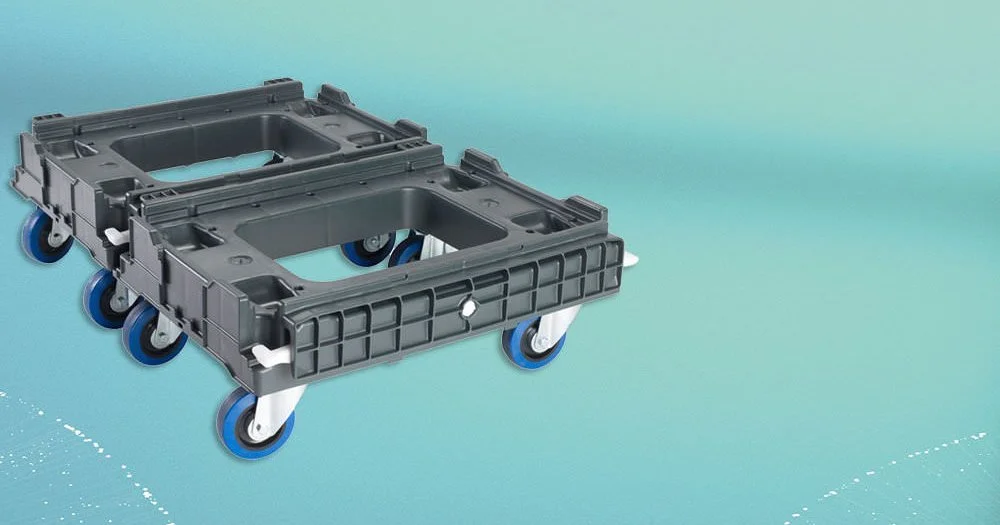
The plastic dolley occupies a peculiar position in the modern supply chain: everywhere present, rarely examined. It moves through warehouses and retail stockrooms, across loading bays and supermarket floors, carrying the weight of commercial operations that would slow considerably without it. In Singapore, where logistics infrastructure is dense and retail competition is unrelenting, the plastic dolley has embedded itself into daily operational life with the quiet persistence of equipment that simply works. To understand where and how it works best is to understand something useful about the systems it supports.
The Logistics Sector: A Natural Fit
Singapore’s logistics sector is, by any measure, one of the most sophisticated in the Asia-Pacific region. Its warehouses handle extraordinary volumes of goods daily, cycling products through receiving, storage, picking, and dispatch with a precision that depends on reliable, efficient handling equipment at every stage. The plastic dolley fits this environment with particular effectiveness.
In large distribution centres, plastic dolleys are deployed across multiple stages of the goods movement cycle:
Receiving and inbound handling
When goods arrive at the loading bay, plastic dolleys allow workers to move palletised and boxed shipments from the dock face into the warehouse interior without relying on powered equipment for every movement. This reduces bottlenecks during high-volume receiving periods.
Internal warehouse transport
Between racking systems, across open floor areas, and through the narrow aisles of high-density storage facilities, the plastic dolley enables workers to move multiple items simultaneously, reducing the number of trips required and improving throughput.
Order picking and consolidation
During the picking process, loaded plastic dolleys serve as mobile consolidation points, allowing workers to accumulate picked items across a zone before transferring them to packing and dispatch areas.
Dispatch and outbound handling
At the outbound stage, plastic dolleys bridge the gap between the warehouse floor and the loading vehicle, providing a stable, manoeuvrable platform for moving consolidated orders to the dock.
In Singapore’s industrial estates, including the busy logistics corridors of Tuas and Jurong, standard warehouse plastic dolleys with load capacities between 300 and 500 kilogrammes are the workhorses of daily operations. Their resistance to humidity, ease of cleaning, and relatively low replacement cost make them a practical and economically rational choice for facilities that cycle equipment through demanding daily use.
Cold Storage and Food Distribution
One application that illustrates the particular advantages of the plastic dolley is cold storage logistics. Singapore’s food distribution network, which supplies supermarkets, food service operations, and wet markets, depends on cold chain facilities that maintain strict temperature and hygiene standards throughout the storage and transport process.
In these environments, the material properties of a plastic dolley are not simply convenient. They are operationally necessary. Metal dolleys corrode in cold, moist environments. Wooden platforms harbour bacteria and are effectively impossible to sanitise to food-grade standards. A plastic dolley manufactured from high-density polyethylene resists corrosion, tolerates repeated cleaning with industrial disinfectants, and maintains structural integrity across the temperature ranges encountered in cold storage facilities.
For food logistics operators in Singapore, the plastic dolley is standard equipment precisely because it meets the hygiene and durability requirements that the environment imposes.
Retail: The Stockroom and the Shop Floor
Beyond logistics, the plastic dolley has become a fixture of retail operations at every scale. From large hypermarkets in suburban Singapore to neighbourhood provision shops restocking their shelves, the plastic dolley performs a consistent and valuable function: reducing the physical effort required to move goods from the stockroom to the point of sale.
The retail applications are worth examining in some detail:
Stockroom management
Goods arriving from distribution centres are typically stacked on plastic dolleys for storage within the stockroom, allowing staff to reposition stock efficiently as shelving requirements change throughout the trading day.
Shelf replenishment
During replenishment cycles, loaded plastic dolleys are rolled directly from the stockroom to the relevant aisle, allowing staff to transfer items to shelves without multiple carrying trips.
Promotional display setup
When promotional floor displays are assembled and disassembled, plastic dolleys provide a practical platform for moving display units, product stacks, and signage across the shop floor without risk of floor damage.
End-of-day consolidation
In supermarkets and large-format retailers, plastic dolleys are used to consolidate returns, damaged goods, and inventory adjustments at the close of trade, streamlining the stock reconciliation process.
In Singapore’s retail environment, where shop floor efficiency is closely linked to customer experience and staff productivity, the contribution of the plastic dolley to smooth daily operations is tangible, if rarely acknowledged.
Events, Hospitality, and Beyond
The applications of the plastic dolley extend beyond the conventional boundaries of logistics and retail. Singapore’s active events and hospitality sector makes regular use of plastic dolleys for transporting catering equipment, audio-visual hardware, furniture, and supplies across hotel ballrooms, convention spaces, and outdoor venues. The combination of load capacity, manoeuvrability, and ease of cleaning makes the plastic dolley a practical choice wherever heavy items need to be moved repeatedly across indoor surfaces.
Healthcare facilities, educational institutions, and government infrastructure operations similarly rely on plastic dolleys for the routine movement of supplies, equipment, and materials through corridors and between floors via service lifts.
A Tool That Earns Its Place
What the evidence from logistics, retail, cold storage, hospitality, and beyond consistently demonstrates is that the plastic dolley is not a single-purpose tool. It is a flexible, durable, and cost-effective handling solution that has found legitimate application across a remarkable range of commercial and operational environments. Its ubiquity is not accidental. It is the product of genuine utility, proven across demanding conditions in one of the world’s most logistics-intensive cities. For any operation in Singapore that moves goods regularly and values efficiency, the case for investing in the right plastic dolley is a straightforward one.