
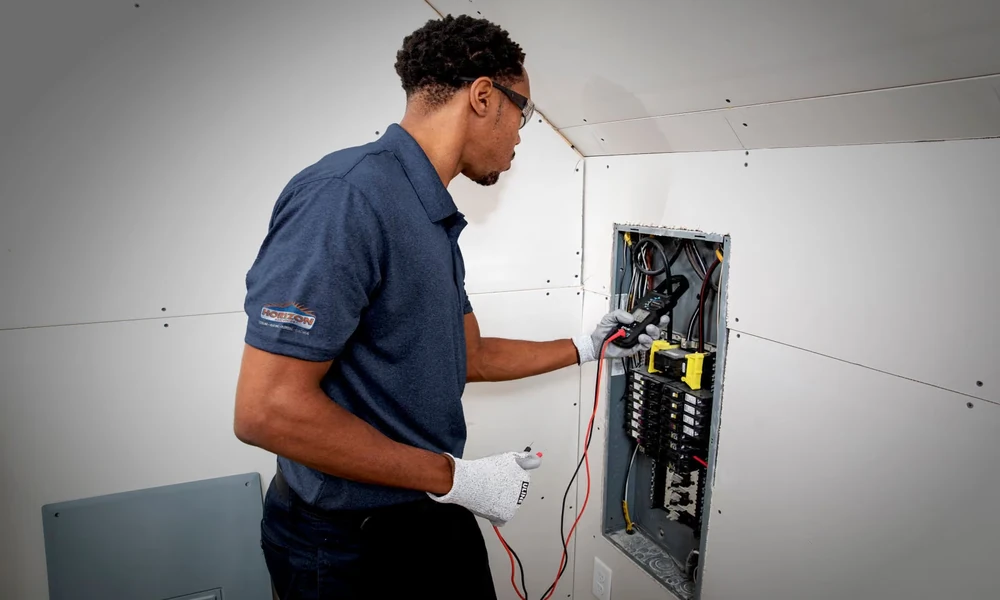
Breakers sit quietly in the panel for years, and most people only think about them when the lights go out. Like any mechanical and electrical device, though, they can wear over time. Heat, age, repeated trips, and environmental conditions all take a toll, and a breaker that no longer works correctly cannot protect the wiring it is meant to guard.
An electric breaker is designed for a long service life, but it is not designed to last forever under every condition. Recognizing the early warning signs helps owners schedule a replacement before a small problem becomes a safety hazard. Here is what to watch for and how replacement typically works.
Why Breakers Wear Out
- Repeated tripping: Each trip stresses internal contacts and mechanisms.
- Heat: Sustained high loads and loose connections raise temperatures inside the panel.
- Moisture and corrosion: Panels in basements, garages, or coastal areas may see corrosion on terminals and bus connections.
- Age: Springs and contacts can weaken after many years in service.
Warning Signs to Watch For
- The breaker trips frequently even when the load is normal.
- The breaker will not reset or will not stay in the on position.
- The handle feels loose, mushy, or does not snap firmly between positions.
- The breaker or panel cover feels warm or hot to the touch.
- There is a burning smell near the panel.
- Visible scorch marks, melted plastic, or discoloration appear on or around the breaker.
- Lights flicker or dim on a circuit without an obvious cause.
Problems That Look Like a Bad Breaker but Are Not
Not every trip means the breaker is failing. An overloaded circuit, a faulty appliance, or damaged wiring can all cause legitimate trips. A qualified electrician can test the circuit to determine whether the breaker or something downstream is the real issue.
When Age Alone Is a Reason to Evaluate
Older homes and facilities may have panels and breakers that are no longer manufactured or that have known reliability concerns. Even without obvious symptoms, an electrical inspection can be worthwhile when buying an older property, after a major renovation, or when adding large new loads such as EV chargers or heat pumps.
What Replacement Typically Involves
- The electrician shuts off power to the panel.
- The cover is removed and the faulty breaker is disconnected.
- Connections and the panel bus are inspected for damage or corrosion.
- A new breaker of the correct type, rating, and listing is installed.
- The circuit is tested and the panel is closed.
Choosing a Proper Replacement
- Match the rating: The amperage must match the wire size and circuit design.
- Match the panel: Use breakers listed for the specific panel make and model.
- Match the protection: Replace GFCI, AFCI, or dual function breakers with the same protection type or as required by current code.
- Look for listing marks: Products with recognized UL certification or an equivalent mark have been tested to safety standards.
Safety First
Working inside an electrical panel exposes a person to energized parts that can cause serious injury, even with the main breaker off. Breaker replacement should be performed by a licensed electrician following local code and any utility requirements.
Simple Habits That Extend Breaker Life
- Avoid running circuits near their limit for long periods.
- Keep the panel area dry, clean, and accessible.
- Test GFCI and AFCI breakers using their test buttons periodically.
- Schedule a professional inspection if any warning signs appear.
Reliable Protection for Years to Come
Paying attention to how breakers look, feel, and behave makes it easier to replace a worn device before it fails. With timely replacement and good habits, the panel continues doing its job of protecting wiring, equipment, and the people who rely on them.