
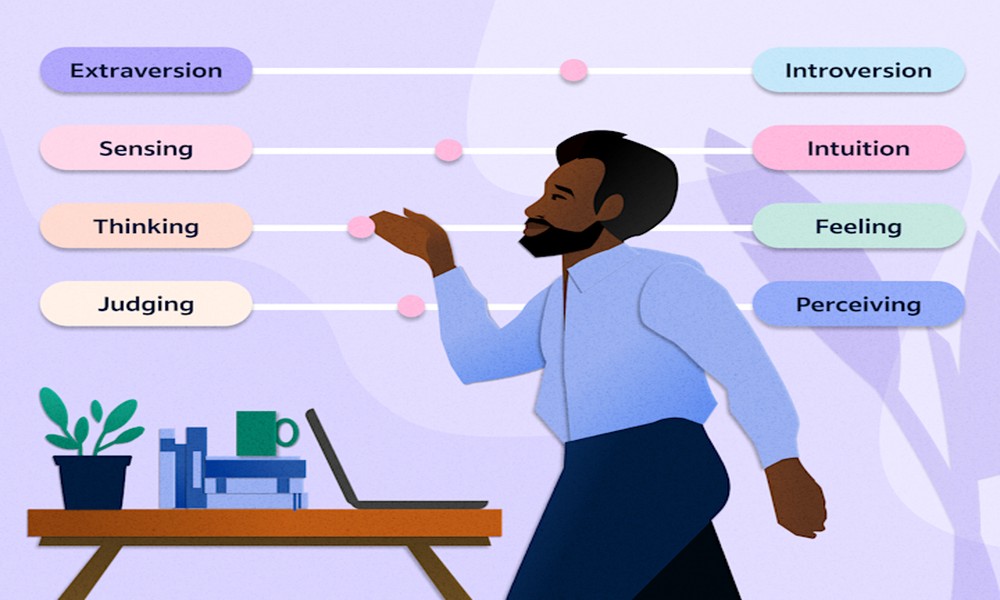
Most people who have explored personality type are familiar with the four-letter code. You complete an assessment, receive something like INTJ or ENFP, and suddenly you have a framework for understanding how you tend to think and interact with the world. For many people, that starting point is genuinely useful. But over time, a common experience emerges. Two people can share the same four-letter type and yet behave quite differently, communicate in distinct ways, and respond to the same situation from noticeably different angles. This is where type elements become relevant, and why they matter in any serious personality assessment process.
What type elements reveal that a four-letter code cannot
A four-letter type code identifies preferences across four dimensions. It tells you which side of each dimension you tend to favour. What it does not tell you is how strongly you favour it, how consistently that preference shows up across different contexts, or how the specific way your preference is expressed differs from someone else who shares the same type. Two people with a preference for Introversion, for example, may express that preference in ways that look quite different in practice. One may be highly selective about social engagement. Another may engage readily in familiar environments but withdraw in unfamiliar ones. The four-letter code alone cannot capture that distinction.
Type Elements is a Core Factors assessment that goes deeper into the four-letter type by exploring how preferences within that type tend to be expressed. It is designed for people who have already identified their type and want a more detailed picture of what that type looks like in their specific case. Practitioners in executive coaching, learning and development, and organisational development use Type Elements to move development conversations beyond the broad strokes of type and into the more specific patterns that shape how a person shows up at work and in relationships.
Why this level of detail matters for development work
Personality type is most useful when it can be applied to real situations. Broad type categories open the door to self-awareness, but development work requires more precision. Understanding not just that someone has a preference for Thinking but how that preference tends to express itself in their communication, their decision-making, and their response to conflict gives a practitioner far more to work with. It also gives the individual a more accurate mirror, one that reflects their actual experience rather than a generalised description of their type.
This is the practical value of Type Elements. Rather than replacing the four-letter type, it builds on it, adding a layer of specificity that makes the results more recognisable and more directly applicable to the situations a person is navigating.
Choosing an assessment that goes beyond the surface
For anyone who has found that their four-letter type feels partially accurate but not quite complete, Type Elements offers a more detailed picture worth exploring. When used by a qualified practitioner, the assessment tends to produce results that feel closer to lived experience, and conversations that move more quickly from recognition to real development.
For More Information Visit : https://corefactors.com/social-dynamics/